
Why a Loved One's Voice Is the Ultimate Time Machine
We obsess over HD video but overlook our most powerful connection: the human voice. Here's why recording your family's voices might be the most important thing you ever do.
Patrick Moore, Founder • January 20, 2026
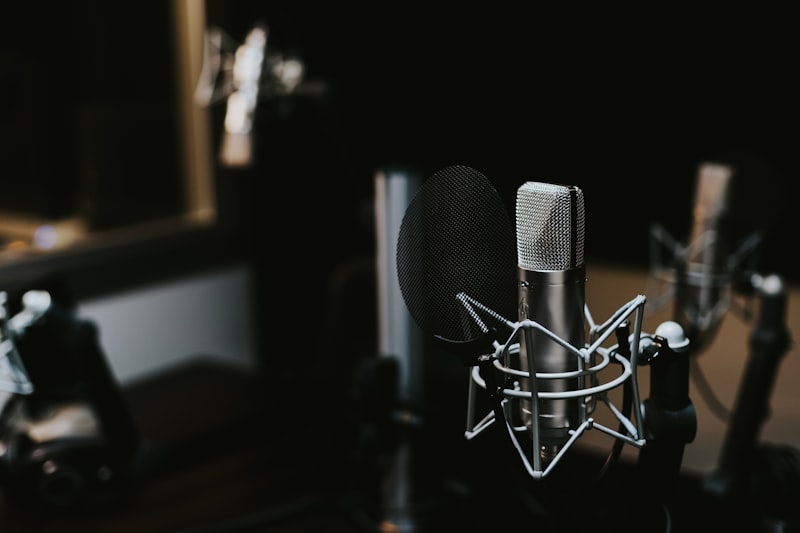
I lost my grandmother's voice somewhere around 2019.
Not her stories — I remember most of those. Not her face — I have photos. What I lost was the exact way she said my name. The little hum she'd make before answering a question. The rhythm of her laugh, which always started quiet and built into something that took over the whole room.
I didn't notice it leaving. One day I just realized I couldn't hear her anymore. Not really. I could remember that she laughed, but not what it sounded like. And no photo in the world could bring that back.
If you're reading this, you probably still have time. Someone in your life still has a voice you'd give anything to hear again someday. This is about why that voice matters more than you think — and what happens in your brain when you hear it.
It's not nostalgia. It's biology.
Here's something that surprised me: hearing your mom's voice doesn't just make you feel better. It literally changes your blood chemistry.
Researchers at the University of Wisconsin-Madison ran a study where daughters were put through a stressful situation, then either hugged by their mothers, talked to them on the phone, or received a text message. The ones who heard their mom's voice had the same hormonal response as the ones who got a physical hug.
↑ Oxytocin
The bonding hormone
Spiked when daughters heard their mother's voice — the same response as a physical hug
↓ Cortisol
The stress hormone
Dropped significantly — but only from hearing the voice, not from reading a text
The text message group? Nothing. Same words, same sentiment, zero hormonal shift. The brain doesn't care what the message says. It cares how it sounds.
That's the part that gets me. Twenty years from now, you could read a transcript of everything your dad ever said — every piece of advice, every joke, every "I love you." And your brain would process it as information. But if you pressed play on a recording of his actual voice? Your nervous system would respond like he was standing next to you.
You can't fake that with text. You can't recreate it from memory. You either have the recording, or you don't.
The part nobody talks about
Your memory of someone's voice gets less accurate every year. Not dramatically — just slowly. Their voice starts to blend with other voices in your head. The specific things that made it theirs — the accent, the pacing, the way they cleared their throat — blur over time. A recording freezes it exactly as it was.
The stuff between the words
Think about the last time someone told you they were "fine." You knew they weren't — because of how they said it. The pause before the word. The flatness in their tone. The way they rushed past it.
That's what a voice carries: everything the words don't say.
When your grandmother tells the story of her wedding day, a transcript gives you the facts. But her voice gives you the nervous excitement in how fast she talks, the softness when she mentions your grandfather's name, the pause where she collects herself before the part that still makes her emotional fifty years later.
A recording captures what we'd call the "vocal fingerprint" — the specific combination of pitch, rhythm, accent, and pacing that makes your mother sound like your mother and nobody else. And here's the thing: your brain is wired to recognize that fingerprint. Neuroscientists at the University of Geneva found that specific regions in your temporal lobe light up when processing a familiar voice — dedicated neural circuitry for recognizing the people you love by sound alone.
What a recording preserves
The exact way they laugh. Their accent getting thicker when they're excited. The pause before they say something important. The sigh that means they're about to tell you something real. Their voice cracking on a word they didn't expect to hit them. All of it.
What a photo album preserves
What they looked like. Where they were standing. What they were wearing. Important — but it won't make your chest tighten the way hearing them say your name will.
Professional oral historians have known this for decades. The Oral History Association's guidelines specifically emphasize that audio captures "para-linguistic cues" — tone, pitch, rhythm, silence — that provide historical and emotional truth that transcripts miss entirely. The pauses are data. The sighs are data. The way someone's voice drops to a whisper when they're sharing something they've never told anyone? That's the most important data of all.
We have 10,000 photos and zero recordings
Here's the paradox of our time: we've never had more tools to capture memories, and we've never been worse at capturing the ones that matter most.
The average person has thousands of photos on their phone. High-definition. Cloud-backed. Organized by date, by face, by location. But ask them if they have a single recording of their parents telling a story — just talking naturally, being themselves — and most people don't.
We optimized for the wrong thing.
Photos show you what someone looked like. Video gets closer, but people perform for cameras — they stiffen up, they smile differently, they become a version of themselves that isn't quite real. Audio is different. Something about not being watched makes people relax into who they actually are. The stories get longer. The details get more specific. The voice drops into its natural register.
That's why podcast-style conversations feel so intimate compared to TV interviews. And it's why the most treasured family recordings are almost always audio, not video — someone talking at the kitchen table, not posing for a camera.
You don't need perfect audio
Background noise — clinking coffee cups, kids playing in the next room, a dog barking — doesn't ruin a recording. It makes it real. In twenty years, you won't care about the sound quality. You'll care that you have the sound of their voice.
Don't overthink it. Just press record.
The biggest barrier to recording your family's voices isn't technology. It's the feeling that you need to set up a formal interview with professional equipment in a quiet room. You don't.
Here's what actually works:
How to record a voice memory that matters
Pick a comfortable moment
The kitchen table after dinner. A walk. A car ride. The less formal, the more natural they'll be.
Start with something easy
Don't open with 'tell me about your childhood.' Try: 'What did your kitchen smell like growing up?' or 'Tell me about the first car you ever drove.' Specific beats general.
Let them wander
The tangents are the treasure. When they go off on a side story about someone you've never heard of, that's usually when the best stuff comes out.
Don't stop when it gets quiet
Silence doesn't mean they're done. It usually means they're deciding whether to tell you the real version. Wait.
You can use your phone's voice recorder. You can use Memory Murals, which transcribes the audio automatically so you get both the voice and the searchable text. The tool doesn't matter nearly as much as the decision to press record in the first place.
But here's the part I want to be honest about: the window closes. Not with a warning. Not on a schedule. Just quietly, one ordinary Tuesday, when you realize the person you wanted to record isn't available anymore — or their voice has changed, or their memory has shifted, or the stories have gotten shorter.
You won't regret a single recording you make. You will absolutely regret the ones you didn't.
And if you've already lost someone, the voicemails saved on your phone are likely the most preserved version of their voice you have left — here's the playbook for getting those off the carrier and into something permanent before the next phone change quietly takes them. If you don't yet know whether their carrier is already counting down, the primer on what happens to voicemails when someone dies explains the retention windows at each major carrier and what triggers the actual deletion clock.
For the families who eventually want to bring the voice back into the physical world — linking the gravestone to the voice itself — memorial QR codes are the small medallion that opens a recorded memorial when a visitor scans it. A grandchild scanning a code on a headstone in 2055 and hearing the voice for the first time is one of the more powerful uses of voice we've seen.
Start with one conversation
You don't need to record a life history in one sitting. You need one conversation. Fifteen minutes. One story you've heard before but never recorded.
If you want guided prompts to get the conversation going, Memory Murals has 50 storytelling questions designed to unlock the stories people don't think to share — from "What's your very first memory?" to "If you could leave one message for the people you love, what would it be?"
The voice you're hearing right now in your head — the one belonging to the person you're thinking about — is the clearest it will ever be. Next year it'll be a little fuzzier. The year after that, fuzzier still. Other families have written us about the stories they'll never hear again — read that one if you need the activation energy this week.
If the person you're thinking about has a recent dementia diagnosis, the timing pressure is real and the playbook is different — our hub for families inside an active dementia diagnosis gathers the specific practical guidance for that season.
Press record while it's still sharp.
Start preserving their voice today →
Common questions
Does hearing a loved one's voice actually change your body chemistry?
Yes — it's not just emotional. A University of Wisconsin-Madison study showed that hearing a mother's voice triggers the same oxytocin spike as a physical hug, while simultaneously dropping cortisol (stress hormone) levels. Text messages with the same words had no hormonal effect at all. Your brain responds to the sound of the voice, not the content of the message.
Is audio more valuable than video for preserving family stories?
For most families, yes. Video makes people self-conscious — they perform for the camera. Audio lets people relax into their natural voice. The result is longer stories, more specific details, and a more authentic version of the person. Professional oral historians have known this for decades: the best family recordings are almost always audio-first.
What kind of stories should I try to record?
Start with whatever comes naturally. The best recordings aren't planned interviews — they're conversations. Ask about specific sensory details ("What did your grandmother's house smell like?") rather than big abstract questions ("Tell me about your life"). The small, specific details are what make a recording feel alive twenty years later.
I feel awkward asking someone to record their stories. Any advice?
Don't frame it as "recording." Frame it as a conversation. Put your phone face-down on the table and just start asking questions. After a few minutes, they'll forget the phone is there. The most natural recordings happen when the person doesn't feel like they're being interviewed. For more on this, read our guide on how to get your loved ones to share their stories.
About the author
Patrick Moore, Founder of Memory Murals
Patrick Moore is the founder of Memory Murals. He built it after realizing how much of his own family's history had quietly slipped away — to help families preserve their stories, voices, and photos while they still can.
Related Stories
Lists & Roundups
25 Questions to Ask Your Mom Before It's Too Late (And Why Each One Matters)
Most of us think we know our mothers. But between the school pickups and the phone calls, there's an entire life you've never asked about. These 25 questions will change that.
Patrick Moore • March 31, 2026
How-To Guides
You Have the Questions. Here's How to Actually Record the Answers.
Every article gives you a list of questions to ask your grandparents. Almost none of them tell you what to do next. Here's the part nobody writes: how to actually capture the answers so they outlive the conversation.
Patrick Moore • April 11, 2026
Insights
The Stories You'll Never Hear Again: Why Every Unrecorded Day Is a Permanent Loss
Your family is losing stories every single day. Not to tragedy or disaster, but to the quiet, ordinary passage of time. Here's why the window is closing faster than you think.
The Memory Murals Team • March 29, 2026