
Wedding Tribute Ideas (2026)
The wedding slideshow has become the default tribute, and most of them get watched once. Here are 11 wedding tribute ideas that last longer — honoring parents, grandparents, and people who couldn't be there. Plus an honest take on what works and what feels forced.
The Memory Murals Team • May 11, 2026
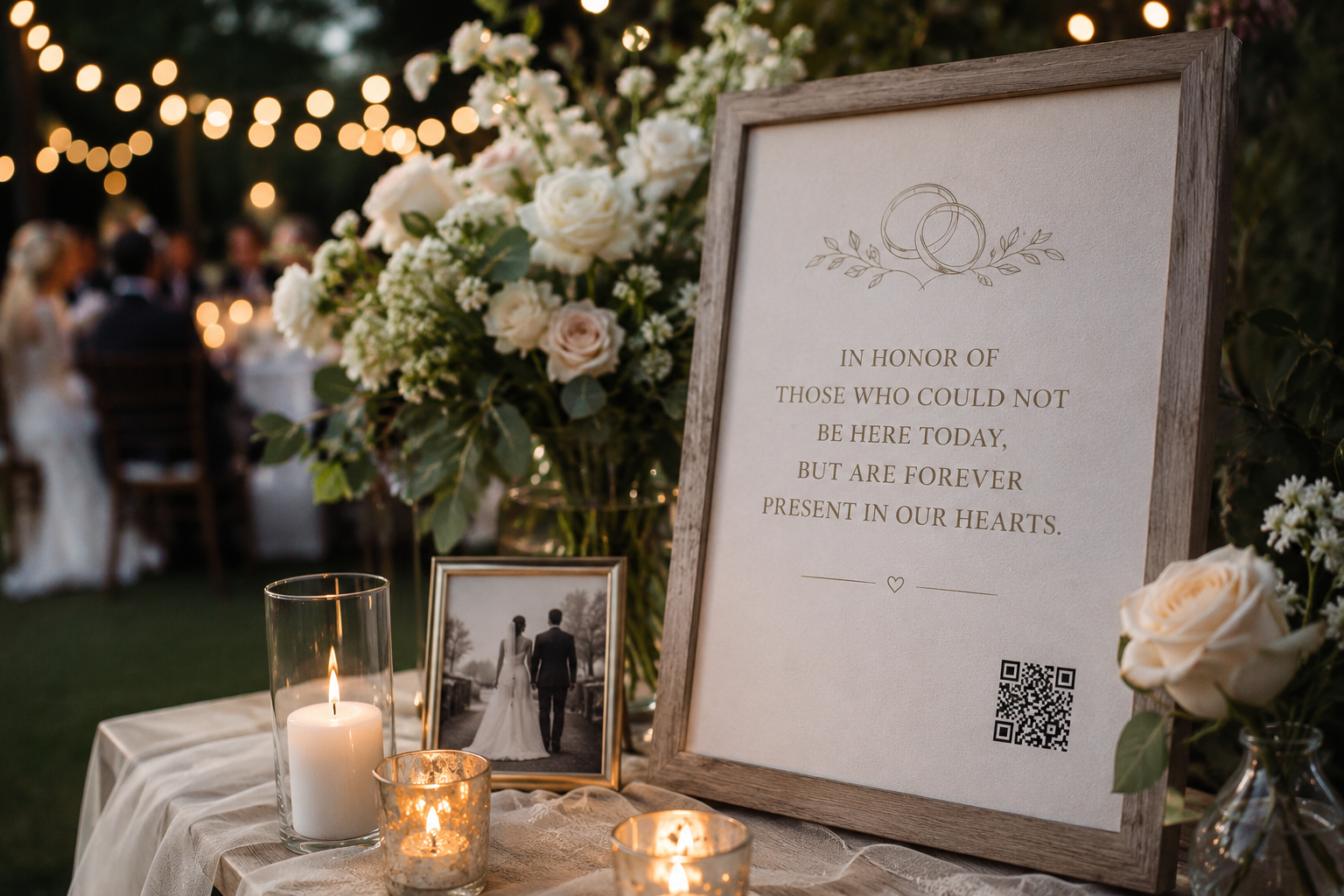
You're three weeks out from a wedding. The slideshow has been compiled, the seating chart's done, the cake's tasted. And you're sitting at 11pm thinking about something more — some way to honor a parent, a grandparent, the people who got the couple to this moment. The slideshow was supposed to be it. But everyone's seen one. They flash through, people clap politely, and twenty minutes later nobody could tell you a single image that was in it.
This post is for the bride, groom, parent, sibling, or wedding planner who wants the tribute to actually land — and last. Eleven ideas that work, ranked roughly by emotional weight, with honest notes on which feel forced and which become the moment people still talk about at the next family wedding.
Disclosure
We built Memory Murals, a private family archive — voice-first, multi-contributor, designed to hold the kind of stories that get told at weddings and otherwise get lost. We'll mention it where it's actually useful (a few of these tribute ideas benefit from a recorded archive) and otherwise keep out of the way.
The 30-second answer
If you only do one thing: Record a 5-minute audio tribute from the parent who is not giving a speech — a letter, a piece of advice, a memory. Play it during the reception. It's the cheapest and most reliably moving tribute on this list.
If you have time and want something heirloom: Build a recorded "how they met" story collected from both sets of parents, played during dinner, then saved as a permanent family artifact.
If you're honoring someone who's passed: A memorial chair with a photo and a voice recording (more on this below). Slideshow alone isn't enough — the recording is what makes it feel present rather than reverential.
Every wedding has the slideshow. It's a montage of childhood photos set to a song — usually three minutes of the bride or groom, occasionally with their parents, occasionally with their soon-to-be-spouse. People watch it. They smile. It ends.
Three weeks later, ask any guest what was in the slideshow. They will not remember. This isn't because slideshows are bad — it's because images at speed don't hold the way a sound or a moment of stillness does. The slideshow is the entry-level tribute, and the entry-level tribute is fine. But if you want the room to actually feel something — and remember it — the formats below work better.
The most reliably moving tribute on this list, and the most underused. The premise: a parent records a 3–7 minute spoken letter to the bride or groom. It plays at a specific moment in the reception — usually during dinner, before toasts.
It works because the room is forced to listen. A speech in real time gets interrupted by laughter, applause, ambient noise. A pre-recorded tribute, played with the lights low and the music down, has the room's full attention. The parent can also say things they wouldn't be able to say through tears at the microphone.
What to record: A letter to the child. Not advice ("be patient with each other"), not a roast. A specific memory — the day they were born, the first day of school, the moment the parent realized they were going to be okay in the world. Specificity is what makes it land.
How long: Five minutes is the sweet spot. Under three feels rushed, over seven loses the room.
Equipment: A phone's voice recorder is fine. Quiet room, no AC humming, no second microphone — close to the phone, single take if possible. Don't over-produce it. The intimacy is the point. Our voice-recording-books-for-grandparents roundup covers the tools if you want something more guided than a raw phone recording.
Why this beats a slideshow: Voice carries emotional content that images don't. The parent's voice — the cadence, the catch in the throat at the right line — is the part the bride or groom remembers ten years later.
A variation on the voice tribute, optimized for couples whose parents are alive. Both sets of parents record a short story — how they met their own spouse — for 2–3 minutes each. The four recordings get played in sequence during dinner.
What makes this work: the parents' how-they-met stories are almost always better than they realize, and almost always under-told. Adults grow up never hearing the actual story of how their parents got together. The wedding is the natural moment to ask, and the wedding audience is the perfect audience to hear it.
Bonus framing: Add a fifth recording — the couple's own how-they-met, recorded in advance — so the room hears three generations of love stories in twenty minutes.
The artifact afterward: Save the recordings as a permanent family file. This becomes the kind of thing the couple's eventual children will listen to twenty years from now — which is rare for wedding content.
Grandparents who are too frail to travel. A parent stationed overseas. A sibling on a research expedition. A best friend on bedrest.
The tribute formats that work:
- A pre-recorded message from them, played for the room. Three minutes max. The person doesn't have to be present to be present.
- A reserved seat at the head table with their name on the place card, with the explanation given quietly to immediate family before the meal.
- A specific moment dedicated to them in a toast — not the whole toast about their absence, but one sentence that names them out loud. "Aunt Marie couldn't be here today, but she taught me how to make pie, and the table tonight has her pie on it."
The mistake people make: making the absence the theme of the wedding. The tribute should name them, honor them, and then move on. The day belongs to the couple.
The hardest tribute to get right. The wrong version makes the wedding feel like a memorial service. The right version makes the deceased feel present without overshadowing the celebration.
What we've seen work:
- A memorial chair at the family table with a framed photo and a single flower. Quiet, not announced, present. Guests notice or they don't, and either is fine.
- A voice recording played briefly during a quiet moment — the meal, the cake cutting, the first dance. The deceased's voice, two or three sentences, woven into the day. Especially powerful if you have a recording of them speaking about the bride or groom from years ago.
- A material object incorporated into the ceremony or dress — grandmother's lace sewn into the veil, grandfather's watch worn by the groom, a piece of the deceased's wedding band re-set into a new ring.
- A line in a toast that names them — once, with specificity. "My father isn't here tonight, but he taught me that the right person is the one who shows up the day after you fall apart. Tonight I get to celebrate marrying her."
What doesn't work: making the deceased's absence the centerpiece of the speeches or programs. The instinct is right; the execution often overshadows the celebration. Naming once, honoring with presence, then letting the joy of the day carry forward — that's the format.
Standard guest books are dead. Eighty signatures, no context, never opened again. Replace it with one of these formats that actually generates content the couple will read later.
Prompted note cards. A small card at each place setting with a single prompt: "Write down one thing you wish for the couple, and one piece of advice that was given to you that you'd pass on." Collected at the end of the meal. The prompts make the cards readable; the open-ended signature does not.
Voice memo station. A tablet or laptop with a simple voice-recording app set up in a quiet corner. Guests record a 60-second message. The format generates content that's emotionally richer than written notes — and far more likely to actually be revisited.
The audio guestbook trend. A handful of vendors now rent vintage rotary phones rigged to record audio messages. Guests pick up the receiver, leave a recording. It looks beautiful, it's gimmicky in a charming way, and it produces a recording the couple can actually listen to.
In all three cases, save the result as part of the family's broader archive so it doesn't get lost in a drawer.
This one's higher-effort and higher-reward. In the weeks before the wedding, you (or a wedding planner, or a friend) secretly interview the parents, siblings, and a few close friends of the couple. Each person answers the same three or four questions:
- "What was [bride/groom] like as a kid?"
- "When did you first know they were going to be okay?"
- "What's the moment you knew their partner was the right one?"
- "What do you want them to know on this day?"
The footage gets edited into a 4–6 minute video. Played during dinner, after the slideshow. Not in place of the slideshow — in addition to. The slideshow is photos; this is people in their own words.
Why it lands: The couple is hearing things they've never heard — what their own parents and friends actually think of them, articulated. There's no faking the reactions.
Cost note: A friend with an iPhone and iMovie can make this work for free. A professional wedding videographer adds polish and ~$500–1500 to the bill. Both versions land — the polish is nice-to-have, not load-bearing.
The most common toast format and the most often phoned in. The bar is low. You can clear it.
What separates a memorable parent toast from a forgettable one:
- One story, told in detail. Not "she was always such a kind kid" — "when she was nine, she made her brother a birthday card that I still have, and on the inside it said..." Specificity carries.
- A line about the new spouse, not just the child. Toasts that only honor the child while ignoring the new partner are a known sour note. One genuine line about why this person is the right person — not generic compliment, but a specific observation.
- Under five minutes. No one in the history of weddings has wished a parent toast were longer.
- Read from a card, not memorized. Memorization fails under emotion. The card is a kindness to yourself and the room.
If you want to take it further: record the toast in advance (audio only) as a practice run, listen back, then perform it live. The practice cuts the length and tightens the language by about a third.
A higher-effort artifact that doubles as a wedding gift. Variations:
The letter-to-the-couple book. Solicit letters from parents, grandparents, siblings, mentors, close friends — handwritten or typed. Bind them into a small book or box. Presented to the couple privately the morning of the wedding, or as part of the rehearsal dinner.
The "open on" letter series. Letters with instructions on the envelope: "Open on your first anniversary." "Open after your first big fight." "Open when you become parents." Twenty-five years of small unwrappings, all written before the wedding.
The recorded version. Same concept but audio — short 2-minute recordings instead of written letters, saved as a permanent family file. We're biased toward this format — spoken letters age better than written ones because the voice carries what the page can't. Our piece on the sound of home and why a loved one's voice matters covers why audio holds up where text doesn't.
Material tribute. Small. Quiet. Almost no logistics.
- A locket pinned inside the bouquet with a photo of a deceased parent or grandparent.
- A grandmother's brooch sewn into the dress lining.
- A grandfather's tie clip on the groom's pocket.
- Something blue from a parent's wedding, woven in.
The tribute doesn't need to be announced. The person carrying it knows. The photographer captures it. The couple later passes the same object to a child or grandchild at their wedding. The object accumulates meaning across generations.
This is the lowest-effort, highest-durability tribute on the list. If you're overwhelmed by the logistics of the others, do this one. It's enough.
A small display at the reception venue: framed wedding photos of both sets of parents and grandparents. Captioned with the year and location. Set up near the guest book or seating chart.
What makes this work: it's a tribute that contextualizes the day. The couple's wedding is the latest entry in a string of weddings going back several generations. Guests linger at the wall, especially older family members who know the photos. Conversations get started.
Easy upgrade: Add a small QR code or a single tablet that links to a digital archive with the same photos plus stories about each couple. (This is where a tool like Memory Murals does work — we built it specifically for the multi-generational family archive use case, but any private family archive works for this.)
The tribute most people skip entirely. The wedding ends. Guests go home. The couple wakes up Sunday morning with a small wrapped package on the bedside table — left there by a parent or sibling the night before.
Inside: a single artifact that holds emotional weight. A handwritten letter from a parent. A recording on a small playback device. A photograph nobody else has seen. A piece of jewelry meant for the moment after the celebration, not during.
What makes it work: the timing. The wedding's loud, full of people, full of obligations. The morning after is quiet — the moment when the couple actually processes what just happened. A small tribute waiting at that hour lands disproportionately to its size.
A few tributes we've seen fail consistently and would skip:
The 20-minute slideshow. Past about four minutes, the room disengages. Edit ruthlessly. Photos in the slideshow should have made the cut for a reason — and "this was a cute one" is not a reason.
The toast that lectures the couple about marriage. Especially common from older relatives. "Marriage is hard work. You have to..." Nobody has ever changed their relationship behavior because of a wedding toast.
The surprise montage with sad music. When the slideshow song is somber and the photos are of deceased relatives, the room is unsure whether to feel grief or joy. The day can carry one mood deeply; switching modes mid-reception is hard.
The tribute that involves audience participation. "Now everyone stand up if you've been married more than 20 years..." This works in the abstract and fails in execution. The flow of the reception is fragile; participation tributes break it.
The tribute that's actually about the giver. Toasts that turn into the giver's own story with a thin connection to the couple. Spot them in advance, redirect, save the room.
The pre-recorded voice tribute
5 minutes from a parent. Quiet room, lights down, full audience attention. The single most reliable emotional landing in this whole list.
The how-they-met parent story
Three generations of love stories played in sequence. The parents' versions are almost always better than they realize.
The memorial chair with a quiet voice recording
For honoring someone who has passed. Presence, not centerpiece. Names them once, lets the joy of the day carry forward.
The prompted guest book or voice memo station
Replaces the dead-signature guest book with content the couple will actually revisit. Prompts > open prompt.
The morning-after gift
Tiny, quiet, lands disproportionately. Most people skip it. Don't.
The 20-minute slideshow
Cut to under four. The room disengages, and the bride has seen all the photos already.
The tribute that makes a deceased loved one the theme
Honor them once, with presence and specificity, then let the day carry forward. The wedding belongs to the couple.
The lecture-toast
Nobody has changed their marriage behavior because of a wedding toast. Tell a story instead.
The audience-participation tribute
Breaks the flow of the reception. Save the trivia game for the rehearsal dinner.
The honest verdict
The slideshow is fine. It's the floor, not the ceiling. The tributes that actually get remembered are the ones with a single voice, a single moment of stillness, and specificity. A 5-minute voice recording from a parent is the highest-ROI tribute on this list — it's nearly free, it lands every time, and the audio file becomes a permanent artifact the couple's children will eventually hear. If you only do one thing from this list, do that one. Then layer in the smaller tributes (the brooch, the memorial chair, the morning-after gift) as you have bandwidth. The big over-produced productions rarely outperform the quiet specific ones.
If you want a place to keep the voice recordings, letters, and stories from a wedding so they don't end up scattered across phones and Google Drive folders, give Memory Murals a try — we built it for exactly this use case. And whatever you build, pair it with the family memory ideas in our other tribute posts so the wedding isn't the only moment you capture for the long arc. The wedding's a peak, not the whole mountain — our companion post on anniversary tributes covers how to keep building the archive after the day itself.
What's the most meaningful wedding tribute to a parent?
A 5-minute pre-recorded voice tribute from the parent, played during the reception, is the most consistently moving tribute we've seen. It works because a recorded voice in a quiet room holds the audience's attention in a way a live speech often can't — the parent can say things they couldn't say through tears at a microphone, and the recording becomes a permanent artifact the bride or groom can listen to years later. A handwritten letter delivered the morning after the wedding is a close second.
How do you honor a deceased parent at a wedding?
The formats that work: a memorial chair at the family table with a framed photo and a single flower (quiet, not announced); a voice recording of the deceased played briefly during a quiet moment; a material object woven into the ceremony or attire (grandmother's lace, grandfather's watch); one specific line in a toast that names them with specificity, then moves forward. The mistake to avoid: making the deceased's absence the theme of the day. Honor once, with presence, then let the joy of the celebration carry forward.
Is a slideshow at a wedding outdated?
No, but it's the floor of wedding tributes, not the ceiling. Slideshows under four minutes still land. Past that, the room disengages. The bigger limitation is that slideshows show without telling — they don't carry the emotional weight that a voice or a single moment of stillness can. Use the slideshow as one element, not the whole tribute strategy.
What's a unique alternative to the standard wedding guest book?
Three options that produce content the couple actually revisits later: (1) prompted note cards at each place setting with a single specific prompt ("write down one piece of advice that was passed to you that you'd pass on to the couple"); (2) a voice-memo station in a quiet corner where guests record 60-second messages; (3) a rotary-phone audio guestbook (rented from a small vendor in the wedding-tech space). All three beat 80 illegible signatures.
How long should a wedding tribute video be?
Pre-recorded voice tributes: 3–7 minutes, with 5 as the sweet spot. Slideshow montages: under 4 minutes. Surprise interview-style videos: 4–6 minutes. Anything longer asks the room to sustain attention past where guest patience naturally drops. The tribute that wishes it were longer doesn't exist; the tribute that wishes it were shorter is at every wedding.
Related Stories
Milestone Birthday Tribute Ideas: 50th, 60th, 70th, 80th, 90th (2026)
A 50th, 60th, 70th, 80th, and 90th birthday each calls for a different kind of tribute. Here's the decade-by-decade breakdown of what actually lands — plus 9 tribute formats that work better than another wrapped present they don't need.
The Memory Murals Team • May 11, 2026
Anniversary Tribute Ideas: How to Honor a Couple's Story (2026)
1st, 10th, 25th, 50th, 60th — every anniversary calls for a different kind of tribute. Here's the milestone-by-milestone breakdown, plus 10 tribute ideas that work better than a card and a candle. Includes how to honor a couple when one spouse has died.
The Memory Murals Team • May 11, 2026
Best Gift for Grandparents Who Have Everything: 15 Meaningful Ideas They'll Actually Love in 2026
Struggling to find the perfect gift for grandparents who seem to have it all? Discover 15 deeply meaningful ideas they'll cherish long after 2026.
The Memory Murals Team • March 27, 2026