
Is Your Camera Stealing Your Memories? The Science
The more we document, the less we may remember. Here's the science behind the photo-taking impairment effect — and how to use photos as cues instead of replacements.
Patrick Moore, Founder • February 23, 2026
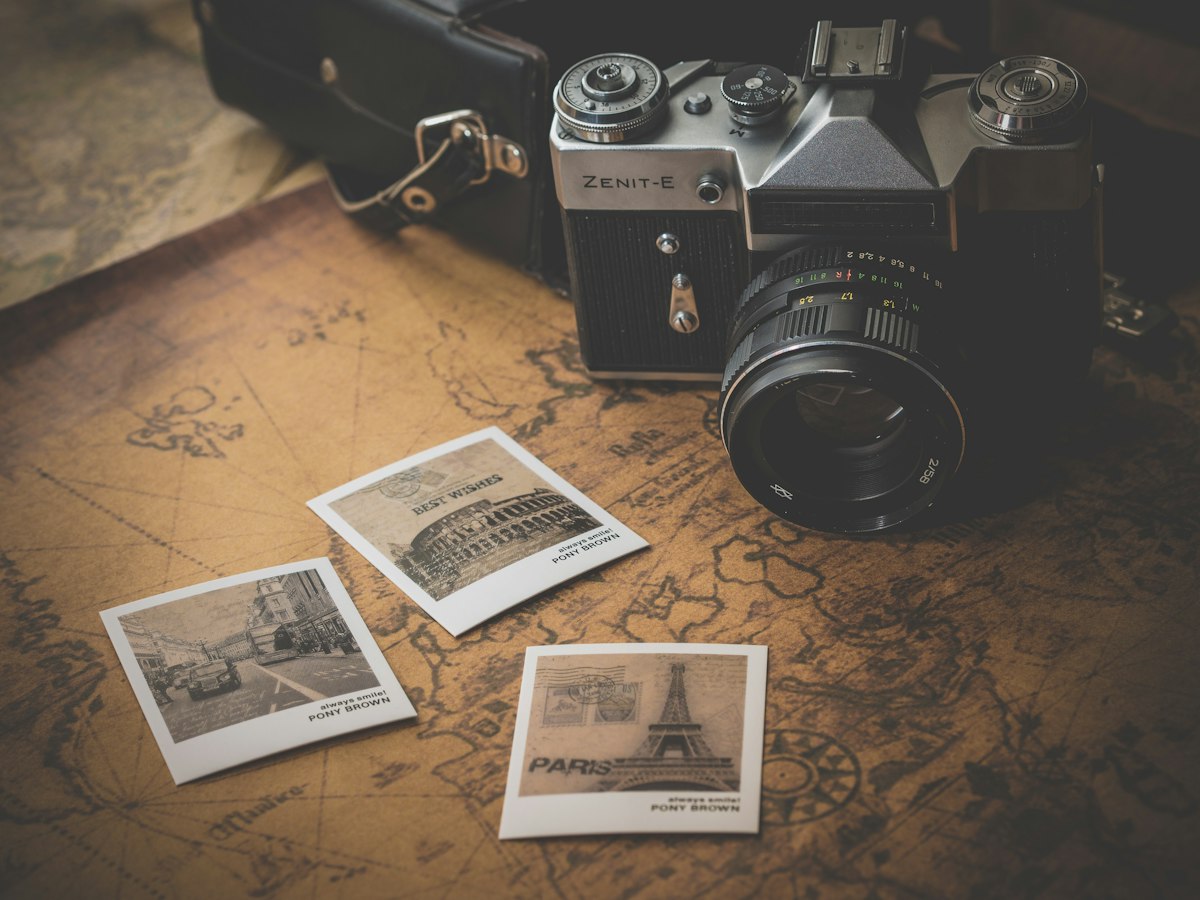
Last summer I watched my daughter take her first steps at the park. I remember reaching for my phone. I remember framing the shot. I remember the burst of six photos I fired off.
What I don't remember — not clearly, anyway — is the look on her face.
I have the photos. But the actual moment? It's fuzzy. The sound of her laughing, the way the grass felt under my feet, the specific quality of the afternoon light — all of it dimmer than it should be.
Turns out there's a name for this. It's called the Photo-Taking Impairment Effect — a real, measurable drop in how well you remember things you photograph versus things you simply watch. But before you smash your phone, know this: photos aren't the enemy. They're a tool. And like any tool, they can either help your memory or quietly replace it.
1. Your Brain Is Outsourcing to Your Camera
Dr. Linda Henkel at Fairfield University ran a study in 2013 that kicked this whole conversation off. She had people tour a museum. Some photographed objects; some just looked at them. The photographers remembered fewer objects — and fewer details about those objects [Henkel, L. A., Psychological Science]. It wasn't just distraction. Something deeper was happening.
Cognitive Offloading
When you snap a photo, your brain can treat the camera like an external hard drive. It decides — subconsciously — that it doesn't need to fully store the experience because the camera already did. You're not making a conscious choice to forget. Your brain is just being efficient in the worst possible way.
This isn't a new human instinct. We've always outsourced memory — to notebooks, to calendars, to GPS. The camera is just another tool our brains use to conserve energy. The problem is that instead of building rich, multi-sensory memories of experiences, your brain leans on the external record and moves on.
This connects to something broader. When your family photos live only in an isolated camera roll — no context, no story, no connection — they become what we've called The "Digital Orphan" Crisis. Technically preserved. Practically forgotten.
The 2025 Update: Newer research keeps confirming this. A 2025 study by Unal, B., et al., found that even screenshotting triggers the same memory impairment [Journal of Applied Research in Memory and Cognition]. And it happens even when you're using your own familiar phone — not some unfamiliar lab device. Offloading isn't a quirk. It's become a deeply ingrained habit [NIH / PubMed, 40195208].
2. You're Living Behind the Lens
Memory runs on attention. The more attention you give an experience, the richer and longer-lasting the memory. But when you're fussing with angles, checking exposure, and trying to get the perfect shot — your attention isn't on the experience anymore. It's on the documentation.
That shift matters. Real memories aren't just visual. They're the background noise, the smell of the air, the feeling in your chest, the emotional weight of the moment. When you narrow your focus to what looks good on screen, you lose everything around it.
Fully Present
When you're just there — no phone — your brain processes everything at once. Visual cues, sounds, emotions, body sensations. All of it weaves into a dense, multi-layered memory that sticks.
Behind the Camera
When you're focused on the shot, your attention narrows to framing and focus. The rest — the texture of the moment, the surrounding context — gets dropped. You end up with a good photo and a thin memory.
Social media makes this worse. The pressure to capture something "post-worthy" pushes your attention even further from the experience and toward performance. If you're curious about that rabbit hole, we dug into it here: Is Social Media Rewriting Your Childhood?.
This is exactly why Memory Murals isn't just another photo album. Features like Audio Memories let you pair photos with the actual sounds and voices of the moment, and Legacy gives you guided prompts that turn flat images into real stories. Start your free 7-day trial and see the difference.
3. How to Make Photos Work For Your Memory
Here's the good news. Photos can actually strengthen memory — but only when you use them as triggers, not replacements. The switch is intentionality.
Zoom In (Literally)
Henkel's follow-up work found something surprising: when people zoomed in on a specific detail before taking a photo, the memory impairment disappeared [Henkel, L. A., Psychological Science]. Why? Zooming in forces you to look — really look — at something specific. You're not offloading anymore. You're paying closer attention than you would have otherwise. The camera becomes a tool for focus, not a substitute for it.
Tell the Story Later
Ten thousand untouched photos in a cloud folder do nothing for your brain. But picking the best photo, thinking about what was happening around it, and telling someone the story? That does everything. Psychologists call it elaborative rehearsal — the act of narrating a memory strengthens the neural pathways tied to it, moving it from fragile short-term storage into something more permanent. For a practical way to start, read 5 Gentle Ways to Start Your Family Archive.
Physical photos play a role here too. Printed photos or photos in memory books get looked at more often and more intentionally than digital ones buried in a folder. That repeated engagement reinforces memory. The debate of Digital vs Physical Memory Books touches on exactly this tension.
And one of the highest-leverage things you can do? Pair photos with voice. Record someone talking about what's in the photo — what happened, who was there, how it felt. That combination of visual and audio creates a memory cue that's incredibly powerful. Related: The Sound of Home: Why a Loved One's Voice is the Ultimate Time Machine.
The Curation Cure: From Digital Hoarding to Living Memory
Capture Mindfully
Take one intentional photo with focused attention, then put the phone away and be present
Select the Top 1%
Regularly review your camera roll and choose only the images that hit you emotionally
Tell the Story
Narrate what was happening around each photo — the sounds, smells, and feelings that surrounded the moment
Preserve with Context
Add the photo and its story to an archive like Memory Murals, turning it into a real retrieval cue
What to Actually Do About This
Understanding the Photo-Taking Impairment Effect isn't about feeling guilty every time you pull out your phone. It's about being smarter with how you use it.
The One-Shot Rule
One intentional photo. Then phone away. Let your brain do its job — encoding the full experience, not just the visual frame.
Active Curation
Go through your camera roll and pick the top 1% — the photos that actually make you feel something. Print them, display them, or add them to an archive. The act of choosing strengthens memory.
Narrate It
Pick one photo and tell its story to someone. Describe the sounds, the smells, how you felt. Saying it out loud cements it in your brain.
Reclaim Your Story
Your camera can be your greatest ally, not an adversary. Memory Murals helps you narrate the context behind photos, add audio memories, and curate intentionally. Start your free 7-day trial and ensure your memories are truly remembered.
Does taking photos really harm my memory?
Research says the act of taking a photo can reduce how well you remember the experience afterward. It's called the Photo-Taking Impairment Effect — your brain treats the camera as external storage and invests less effort in encoding the memory itself [Henkel, L. A., Psychological Science]. That said, photos aren't automatically bad. It's about how you take and use them.
How can I use my camera to improve my memory instead of impairing it?
Two things work. First, zoom in on specific details when you shoot — it forces deeper attention and eliminates the impairment effect [Henkel, L. A., Psychological Science]. Second, don't just take the photos and forget them. Go back, pick the best ones, and tell their stories out loud. That process — active curation and narration — reactivates your memory networks and makes the experience stick [Psychology Today, 2025].
What is cognitive offloading in the context of photography?
It's your brain's tendency to treat the camera as a backup drive. When you snap a photo, your brain can unconsciously reduce the effort it puts into storing the experience, because it assumes the camera has it covered [NIH / PubMed, 40195208]. The result: you have a perfect image and a faded memory. This even happens with screenshots [Unal, B., et al., Journal of Applied Research in Memory and Cognition].
Is the Photo-Taking Impairment Effect a new discovery?
Not really. Dr. Linda Henkel published the foundational study in Psychological Science back in 2013. But smartphones have made the effect far more relevant — and widespread — since then. Research from 2025 continues to expand on her work, showing that the effect holds up across screenshotting, familiar devices, and everyday conditions. It's not a lab curiosity. It's how most of us live.
About the author
Patrick Moore, Founder of Memory Murals
Patrick Moore is the founder of Memory Murals. He built it after realizing how much of his own family's history had quietly slipped away — to help families preserve their stories, voices, and photos while they still can.
Related Stories
Insights
Is Social Media Rewriting Your Childhood? The Hidden Science of "Digital Forgetting"
New research shows sharing photos online sharpens what's in-frame while erasing surrounding context. Here's how to protect the full story behind your memories.
Patrick Moore • February 21, 2026
Pillar Articles
The "Digital Orphan" Crisis: Why 20,000 Photos Can't Replace One True Story
We're raising a generation of digital orphans — children with thousands of images but no context. Here's why family stories matter more than photos.
Patrick Moore • January 20, 2026

Pillar Articles
The Biological Glue: How Your Brain Builds Your Legacy
New research shows memory can be stabilized by physical structures in the brain. Here's what functional amyloids reveal about why some moments last a lifetime.
Patrick Moore • February 22, 2026