The Biological Glue: How Your Brain Builds Your Legacy
New research shows memory can be stabilized by physical structures in the brain. Here's what functional amyloids reveal about why some moments last a lifetime.
Patrick Moore, Founder • February 22, 2026
I can still smell my grandfather's workshop. Sawdust and motor oil and something vaguely like coffee. I haven't been in that room in over 20 years, but the memory is so sharp I could draw you a map of where every tool hung on the wall.
Why does that memory stick when I can't remember what I had for lunch on Tuesday?
Turns out, the answer isn't just poetic. It's physical. Your brain doesn't just "remember" things — it builds them. Molecule by molecule, like laying bricks. And recent research has uncovered the exact protein structures that act as the glue holding those memories in place.
Rethinking the "Villain" of Memory: Functional Amyloids
If the word "amyloid" makes you think of Alzheimer's disease, you're not wrong. For years, amyloid proteins were the villain in that story — tangled plaques that destroy brain function.
But here's where it gets interesting. Not all amyloids are bad.
Research from the Stowers Institute for Medical Research has revealed a different kind of amyloid — functional amyloids — that your brain deliberately creates to stabilize long-term memories. Same basic protein structure, completely opposite purpose. The bad amyloids destroy. The good ones preserve.
Think of it as molecular scaffolding. Your brain builds these structures around the memories that matter most, making them durable instead of disposable.
The 'Bad' Amyloid
The 'Good Twin' — Functional Amyloids
How the Brain Physically Cements Your Past
So what actually happens when you form a lasting memory?
When you experience something significant — the chaos of a wedding day, a child's first steps, a conversation that changed how you see the world — your brain doesn't just file it away. It starts a construction project.
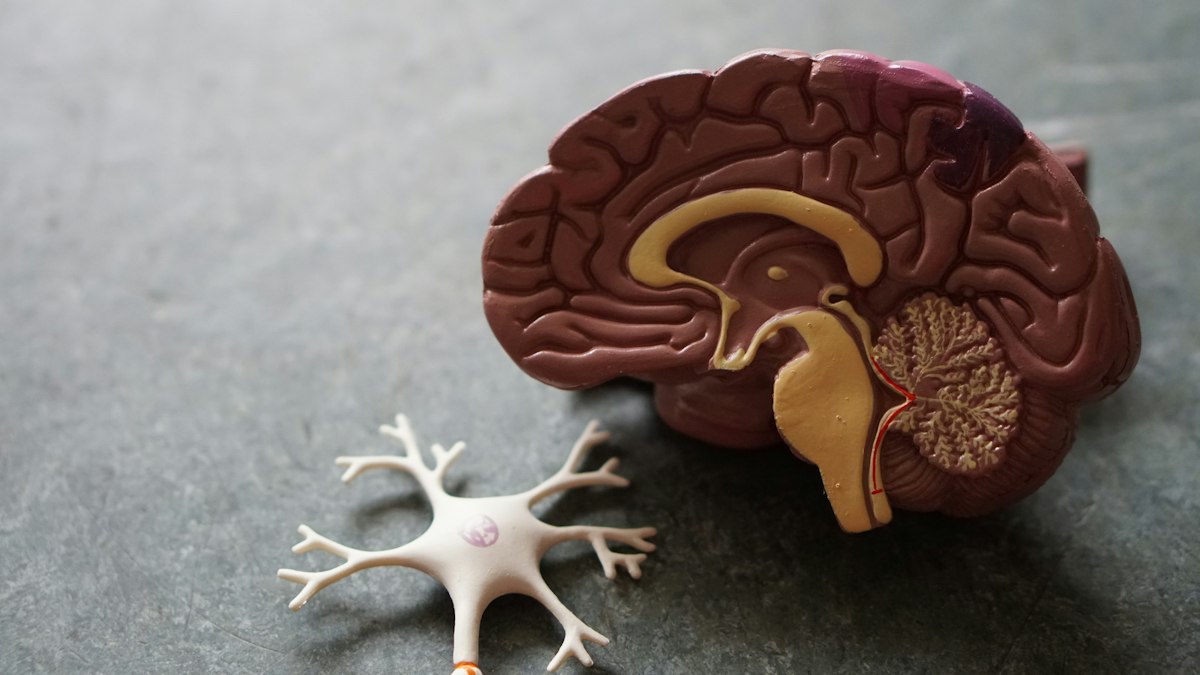
Proteins like Orb2 and CPEB monitor your neural connections. When a connection fires strongly or repeatedly (because the experience mattered), these proteins change shape and lock together into stable structures. They become tiny factories right there at the synapse, continuously producing the proteins needed to maintain that specific connection.
They're the physical architecture of memory. Actual structures you could see under a microscope.
Memory Isn't 'Somewhere' — It's Built
Your memories aren't vague concepts floating around in your head. They're reflected in reinforced neural pathways, strengthened synaptic connections, and stabilized by these functional amyloid structures. Every time you revisit a story, those pathways get easier to travel.
This research, published in journals like PNAS (Proceedings of the National Academy of Sciences), changes how we think about memory. It's not just electrical signals or chemical traces. There's a physical, structural component that gives lasting memories their staying power.
The Brain's Selective Investment: What Gets Built?
If the brain has this incredible glue, why do we still forget most things?
Because building and maintaining these structures takes energy. A lot of it. So the brain is picky. It only invests in long-term construction when the signals are strong enough to justify the cost.
Three things tell your brain "this one's worth keeping":
Emotional Resonance
The amygdala flags intense feelings as important, telling the hippocampus to prioritize storage. The stronger the emotion, the more the brain invests in making it permanent.
Sensory Detail
More senses involved means a stronger neural network. The smell of bread, sound of laughter, texture of a photograph — each one adds another layer to the blueprint.
Repetition & Recall
Every time you retell a story, the pathways reactivate and strengthen. Sharing memories literally reinforces their physical structure.
This isn't passive. You can actively give your brain better signals. And that's where intentional memory preservation comes in.
The Science of Storytelling: A Biological Legacy
Here's where this gets personal.
When you tell your grandchild a story — really tell it, with the sounds and smells and the part where everything went sideways — you're not just passing time. You're doing something biological.
The emotional connection during storytelling, the vivid details you paint with your words, the fact that you've told this story before and will tell it again — all of it sends those "build here" signals to the brain. For you, it strengthens memories you already have. For the kid listening, especially young brains still developing, it can help form entirely new memory structures.
Your stories become part of their physical neural architecture. That's not a metaphor. That's what the research suggests.
This is what we mean when we talk about the "grandparenting buffer" — your stories don't just entertain. They protect. Read more about how your legacy impacts their brain's defense.
How Storytelling Builds Biological Legacy
Share a Story
Tell a meaningful story to a child or grandchild with vivid sensory detail
Emotional Connection Forms
The shared experience triggers emotional resonance in both storyteller and listener
Neural Pathways Strengthen
Repeated telling reinforces functional amyloid structures in the storyteller's brain
New Memories Form
The listener's developing brain constructs its own robust memory architecture from the narrative
Intentional Preservation: Giving Your Brain Better Raw Material
This is why preserving memories on purpose isn't just sentimental. It's a biologically informed strategy.
When you organize, record, and reflect on your family's history, you're actively participating in the processes that strengthen memory at a cellular level. You're giving your brain the emotional resonance, sensory detail, and repetition it needs to build lasting structures.
This is exactly why Memory Murals includes guided storytelling prompts (our "Legacy" feature), audio recording (for "Audio Memories"), and a media library for photos and videos. These tools are designed to help you send the right signals to your brain: "Build here. This moment is worth cementing."
Start your free 7-day trial to see how Memory Murals turns your family's stories into enduring legacies.
By revisiting old photos, recording oral histories, and capturing the why behind your stories — the emotions, sounds, and feelings — you're giving your internal architects better raw material. You're turning a fleeting afternoon into something your mind is more likely to keep. And something your family is more likely to inherit.
For a comparison of different preservation approaches, explore digital vs. physical memory books here.
Build Your Legacy Before the Blueprint Fades
Every laugh, every lesson, every love story your family has — it deserves to be cemented. Memory Murals is designed to help you capture the emotional and sensory cues that support long-term memory formation.
Don't leave your most important moments to the whims of time. Give your brain — and the brains of the people who come after you — the scaffolding they need.
Cement Your Family's Stories
Your family's stories are the biological building blocks of identity. Memory Murals helps you capture the emotional depth and sensory detail that strengthen memories at a cellular level. Start your free 7-day trial and ensure your family's truth is preserved for generations.
What are functional amyloids and how do they relate to memory?
Functional amyloids are proteins that — unlike the harmful amyloids in Alzheimer's — self-assemble into stable structures that help with normal brain function. In memory, proteins like Orb2 (in fruit flies) and CPEB (in humans) form these structures at synaptic connections, acting as scaffolding that keeps long-term neural pathways intact. They're basically the biological glue that prevents important memories from fading. The Stowers Institute for Medical Research has published detailed work on this.
Why do some memories last a lifetime while others are quickly forgotten?
Your brain is selective about where it spends energy. Memories with strong emotional charge, rich sensory detail, and frequent recall get the most investment. The amygdala flags intense emotions as worth keeping. Multi-sensory experiences create denser neural networks. And retelling a story literally reinforces its physical structure. Memories without those signals? The brain lets them go.
How does storytelling and revisiting memories impact the brain?
Every time you tell a story or recall a memory, you reactivate and strengthen the neural pathways behind it. The functional amyloid structures get reinforced — the "glue" gets thicker. For the storyteller, it deepens existing memories. For the listener (especially kids), it can help form brand-new memory structures. Shared storytelling is one of the most powerful things you can do for both your cognitive health and your family's legacy. Learn how to get your loved ones to share their best stories.
Can we intentionally improve our brain's ability to preserve memories?
Yes. By seeking out emotionally rich, multi-sensory experiences — and then actively revisiting and sharing them — you give your brain the signals it needs to invest in long-term construction. Tools like Memory Murals are designed around this: audio recording, visual media, and guided prompts all work together to create the kind of rich input that tells your brain "this one's worth keeping."
About the author
Patrick Moore, Founder of Memory Murals
Patrick Moore is the founder of Memory Murals. He built it after realizing how much of his own family's history had quietly slipped away — to help families preserve their stories, voices, and photos while they still can.
Related Stories

Pillar Articles
The Grandparenting Buffer: Why Your Legacy is Their Brain's Best Defense
A 2026 APA study links legacy-sharing with grandchildren to slower cognitive decline. Here's why preserving family stories may be the brain's best defense.
Patrick Moore • February 3, 2026

Insights
The Science of Memory Enrichment: How Revisiting Family Stories Reshapes Your Brain
Neuroscience shows that actively engaging with family stories strengthens cognitive reserve and builds resilience. Here's how a living family archive protects your brain.
Patrick Moore • February 6, 2026

Insights
The Photographic Paradox: Is Your Camera Stealing Your Memories?
The more we document, the less we may remember. Here's the science behind the photo-taking impairment effect — and how to use photos as cues instead of replacements.
Patrick Moore • February 23, 2026